

keywords are not provided. : ค้นหาหนังสือธรรมะ หน้า 124 / 129
หน้าหนังสือทั้งหมด
280
Understanding Artificial Intelligence
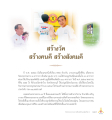
สร้างวัด
สร้างคนดี สร้างสังคมดี
Artificial Intelligence (AI) has revolutionized numerous sectors, from healthcare to finance, by automating processes and providing insights through data analysis. This technology not only enhances ef
289
The Importance of Educating Our Youth
เราได้อะไรจากการมาวัด
ดื่มได้เรียนรู้ว่า เราจะใช้ชีวิตอย่างไร เพราะได้ฟังกรณีศึกษา กฎแห่งกรรม (Case study) จากโรงเรียนอนุบาลฝันในฝัน ไป วิธีว่า เราต้องเกิดอีกหลายภาพหลายชาติ แต่ละชาติก็เกิดเพื่อมาปรั
In today's rapidly changing world, the education of our youth has never been more crucial. Educating young minds not only empowers individuals but also shapes the future of society. By providing acces
5
Advanced Concepts in Buddhism
which are unnecessarily caught up with Thai culture have been minimized or omitted.
The content of this book is more advanced than the for- going titles in the series 'Buddhism in Plain English'. This
This book, part of the 'Buddhism in Plain English' series, offers advanced insights into Buddhism's higher spiritual training, focusing on the renunciation of mundane life. It discusses the common mis
6
The Awakening of Siddhartha Gotama
people see the signs of receding youth and health and respond with disgust, especially at the sight of a corpse. Siddhatha Gotama’s witness of these events was different, however. Confronted by the in
This text delves into the insights of Siddhartha Gotama as he confronts the inevitable realities of old-age, sickness, and death. Rather than succumb to despair, he considers life like a battle where
9
Buddhism in Plain English: A Practical Approach
above — delusion, renunciation and the Buddha’s previous meditation experience — before embarking on the remainder of this book.
Finally, it should be mentioned that the aim of books in the 'Buddhism
This book aims to make Buddhist scriptures accessible to beginners by presenting them in plain English while maintaining accuracy. It provides Pali terminology alongside translations and encourages re
17
Dhamma Practice and Understanding in Dhammacakkapavattana Sutta
translation are hampered in their studies both by the scarcity of the original and its archaic language. In spite of the present author's respect for the original use of language, to leave it in its o
This work addresses the challenges of understanding the Dhammacakkapavattana Sutta due to its original language and scarce resources. The author adapts complex passages to modern language while mainta
33
The Buddha's Teachings on Sensory Pleasures
6. Eating a poisonous fruit: The pleasures of the five senses can be compared to a poisonous fruit. The hedonist, in his greed eats the fruit and must endure the ensuing pain and upset as the poison t
The Buddha uses various metaphors to illustrate the dangers of indulgence in sensory pleasures. He likens them to poisonous fruits, sharp weapons, and children's toys, highlighting the inevitable suff
37
The Dangers of Sensual Indulgence
If it happens that his wealth is taken away in taxes, or stolen by robbers, or damaged by fire or floods, or frittered away by fraudulent enemies then that person will be sorrowful, suffering in body
This text discusses the sorrow and suffering resulting from the attachment to wealth and sensual pleasures, highlighting that these attachments can lead to fights and wars among various social groups.
39
Understanding Self-Mortification in Buddhism
It is for this reason that the Lord Buddha should want to start his sermon by instructing the ‘group of five’ that indulgence of the senses is unsuitable, base, ignoble, without benefit, unsuitable fo
In this text, Lord Buddha teaches that indulgence of the senses is unsuitable for a Buddhist monk and should be avoided. The practice of self-mortification, common among non-Buddhist ascetics, include
44
Understanding Right Intention and Right Speech in Buddhist Practice
subtle defilements¹ [anusaya].
2.1 Right Intention (mundane): At low level Right Inten- tion means having the wholesome intention to be generous, keep the Five Precepts, renounce the world to become a
This text discusses key aspects of Buddhist practice, specifically focusing on Right Intention and Right Speech. Right Intention involves having wholesome intentions such as generosity and the desire
47
Understanding Right Concentration and the Dhammacakka
oupes, keep the Precepts, meditate or listen to Dhamma sermons. Such determination is a precursor of concentration called 'khaṇika-samādhi'.
7.2 Right Concentration (transcendental): At high level Rig
บทความนี้อธิบายถึงการเจริญสมาธิอย่างถูกต้องซึ่งรวมถึงการเข้าถึงสมาธิในระดับที่สูงขึ้น รวมถึง Dhammacakka ซึ่งเป็นแนวทางในการเข้าถึงนิพพาน โดยอธิบายความสัมพันธ์ระหว่างปัจจัยที่นำไปสู่การตรัสรู้และบทบาท
48
Understanding Dhammacakkapavattana Sutta
mon wouldn't have been called 'Dhammacakkapavattana Sutta' if only the Four Noble Truths or Dependent Origina-
tion or the Factors of Enlightenment were important — thus by the name of the sermon, we
In the Dhammacakkapavattana Sutta, the Buddha presents interconnected teachings that highlight the importance of the Four Noble Truths, Dependent Origination, and the Factors of Enlightenment. The ser
51
Understanding Suffering in Buddhism
depressed and dejected.
1.1.8 Feeling slighted [domanassa] : This is when one has a 'chip on one's shoulder' (to be aggressively sensitive about a particular thing or bear a grudge).
1.1.9 Bemoani
This text explores the concept of suffering as taught by the Buddha, outlining twelve types of suffering including feeling slighted, bemoaning losses, and separation from loved ones. It highlights how
52
Understanding Suffering in Buddhism
1.3. Suffering as an affliction
This third meaning of suffering shows the direct inter-rela-
tion with the fourth Noble Truth of the Path of Practice for
an end of suffering. That suffering is an affl
This text discusses the nature of suffering in Buddhism, emphasizing its inter-relation with the cessation of suffering as outlined in the Noble Truths. It highlights that suffering is akin to an affl
54
Understanding the Origin of Suffering in Buddhism
2.2 The Origin of Suffering as a Cause
In explaining the Origin of Suffering, the Buddha intended to make clear that the suffering experienced by living beings has craving as its cause. As soon as the
In this examination of the Buddha's teachings, the Origin of Suffering is explained as being rooted in craving, which leads to a cycle of suffering. The relationship between the Origin of Suffering an
58
Understanding the Noble Eightfold Path
Those who are wise and endowed with Right View will see the dangerous reality of craving, and not delay in practising the Noble Eightfold Path as a vessel to take them beyond the Sea of Worldliness.
4
This text discusses the importance of the Noble Eightfold Path as a means to transcend worldly cravings and achieve Nirvana. It elaborates on how it is the strongest method for ending suffering, highl
60
The Noble Truth of Suffering
The OCR result from the image reads:
---
**4 The Noble Truth of Suffering**
Every living being is a victim of suffering
The Lord Buddha explained the nature of suffering in detail. The Pali word for
The text delves into the concept of suffering, known as *dukkha*, as articulated by the Lord Buddha. It defines *dukkha* by its roots, explaining the inherent negativity of existence. Without sufferin
63
The Suffering of Internment in the Womb
1.1 The Suffering of Internment in the Womb
The foetus is seated upon the faeces of the mother passing through her intestines and has the food being digested in her stomach as a pillow. The foetus is
This text delves into the severe distress endured by a foetus during gestation, likening conditions in the womb to a form of hell due to physical confinement and sensory overload. The foetus experienc
64
Suffering During Birth: The Experiences of the Foetus
suffering of the foetus, like being exposed to a rain of hot ashes. Each time the mother eats something spicy, the whole of the foetus’s body will itch and become swollen with the strength of the spic
This text delves into the intense suffering experienced by the foetus due to maternal actions, particularly when consuming spicy foods, causing skin irritations. It describes 'gabbha parihara mulaka d
65
Aspects of Suffering in Birth
and stabbed with razor-sharp knives. This fifth aspect of suffering at birth is known as 'gabbha nikkhamana mūlaka dukkha'.
1.6 The Suffering of Curtailed Life
From the moment the baby leaves the womb
This text delves into the profound aspects of suffering experienced from the moment of birth. It highlights 'gabbha nikkhamana mūlaka dukkha', which refers to the initial suffering at birth, and exami